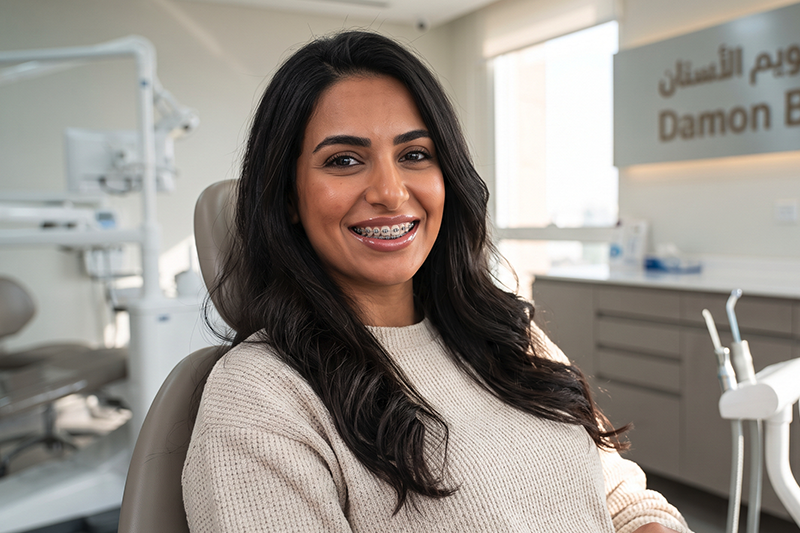



If you did not have orthodontic treatment as a teenager, you may assume that braces are no longer an option. But adults can benefit from orthodontic treatment too, and modern options are more discreet, comfortable and flexible than many people remember.
Whether you want to straighten crowded teeth, close gaps or improve your bite, it is never too late to explore orthodontic treatment.
Today, adults can choose from traditional braces, tooth-coloured options and clear aligners, depending on their individual needs.
Can Adults Get Braces?
Yes. Healthy teeth can be moved at any age.
Orthodontic treatment works by applying controlled pressure to gradually guide teeth into better positions. The biological process that allows teeth to move does not stop simply because you are an adult.
However, adults may have different considerations from children and teenagers. Existing fillings, missing teeth, gum disease, previous dental treatment or changes in the supporting bone may affect your treatment plan. This is why an orthodontic assessment is important before deciding which option is right for you.
Why Are More Adults Choosing Orthodontic Treatment?
Orthodontic treatment is no longer viewed as something only for teenagers.
Adults may choose braces or clear aligners for a variety of reasons, including:
- Crowded or overlapping teeth
- Gaps between teeth
- Crooked teeth
- Overbites or underbites
- Crossbites
- Difficulty cleaning between certain teeth
- Changes in their bite over time
- Improving the appearance of their smile
For some people, the motivation is primarily cosmetic. For others, improving tooth alignment may make it easier to maintain good oral hygiene or improve the function of their bite.
What’s Changed About Adult Braces?
One of the biggest changes is the range of orthodontic options now available.
You are no longer limited to traditional metal braces. Depending on your needs, your orthodontist may discuss several treatment approaches.
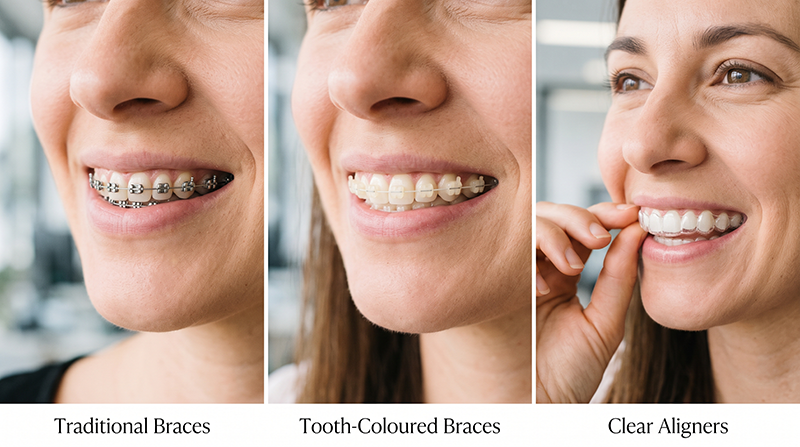
Traditional Braces
Traditional braces use brackets and wires to gradually move teeth into their planned positions.
Modern braces are generally smaller and more streamlined than older designs. They remain a reliable option for treating a wide range of orthodontic problems.
Tooth-Coloured Braces
Ceramic or tooth-coloured braces use brackets designed to blend more closely with the natural colour of your teeth.
They can provide a less noticeable alternative to traditional metal braces while using a similar orthodontic principle.
Clear Aligners
Clear aligners are removable trays designed to gradually move your teeth.
They are particularly popular among adults because they are discreet and can be removed for eating, brushing and flossing. However, clear aligners are not automatically suitable for every orthodontic problem. Your orthodontist will assess your teeth and bite before recommending them.
Are Braces More Difficult for Adults?
Adult orthodontic treatment can sometimes take longer than treatment during the teenage years because jaw growth is complete and tooth movement may be slower. However, treatment time varies considerably from person to person.
The duration depends on factors such as:
- The complexity of your case
- The amount of tooth movement required
- Your bite
- Your chosen treatment method
- How consistently you follow your orthodontist’s instructions
- Your individual response to treatment
Rather than focusing only on a specific number of months, your orthodontist can provide an estimated treatment timeline after assessing your teeth.
What Is Adult Orthodontic Treatment Like?
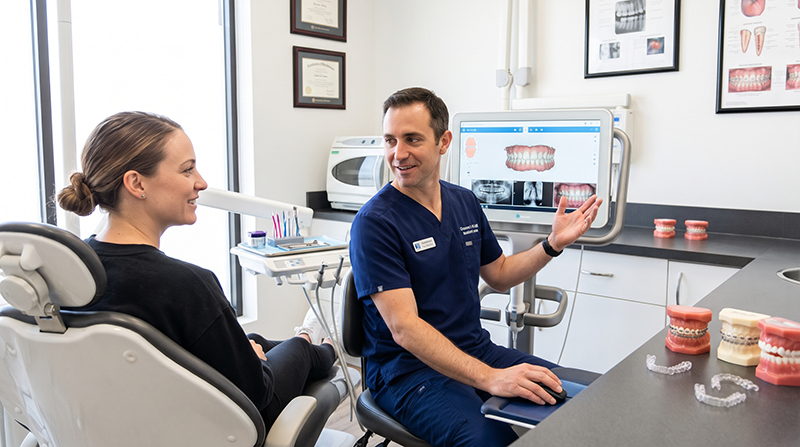
Your treatment will usually begin with an orthodontic consultation.
Your orthodontist will examine your teeth and bite and may use photographs, digital scans and X-rays to understand your dental structure.
A personalised treatment plan can then be developed.
If you choose braces, brackets are attached to your teeth and connected with orthodontic wires. These are adjusted during regular appointments as your teeth gradually move.
With clear aligners, you will receive a series of customised trays that are changed according to your treatment plan.
Regardless of the option you choose, attending scheduled appointments and following your orthodontist’s instructions are important for keeping treatment on track.
What Happens After Braces?
Getting your teeth into their new positions is only part of orthodontic treatment.
After braces or aligners, you will generally need to wear retainers to help maintain the results.
Teeth can naturally shift over time, even after successful orthodontic treatment. Retainers help reduce unwanted movement and protect the alignment you have worked to achieve.
Your orthodontist will explain how often and for how long you should wear your retainers.
Is It Worth Getting Braces as an Adult?

There is no specific age at which you have to stop considering orthodontic treatment.
If you are unhappy with the alignment of your teeth or have concerns about your bite, an orthodontic consultation can help you understand what options are available.
Modern orthodontics offers more choices than ever, including discreet braces and clear aligners like Invisalign. The most suitable option depends on your dental health, treatment goals and the complexity of your case.
It is never too late to improve the alignment of your teeth.
Adult orthodontic treatment has changed significantly, giving patients more discreet and flexible options than were commonly available in the past. From traditional and ceramic braces to clear aligners, your orthodontist can help determine which approach best suits your needs.
If you have been thinking about straightening your teeth but assumed you were too old for braces, contact us at 800777000 to book a FREE consultation with our specialist orthodontists at Go Dental Clinics. Our orthodontic team can assess your teeth and bite, discuss the available treatment options and create a personalised plan to help you achieve a healthier, more confident smile.