



Dentists usually try to preserve natural teeth whenever possible. Treatments such as fillings, crowns, root canal treatment and gum care can often help repair or save a damaged tooth.
However, there are situations where keeping a tooth may no longer be the healthiest or most practical option. In these cases, a tooth extraction may be recommended to relieve symptoms, manage infection or protect your overall oral health.
So, when might removing a tooth be necessary? Here are five common situations.
1. When a Tooth Is Severely Damaged
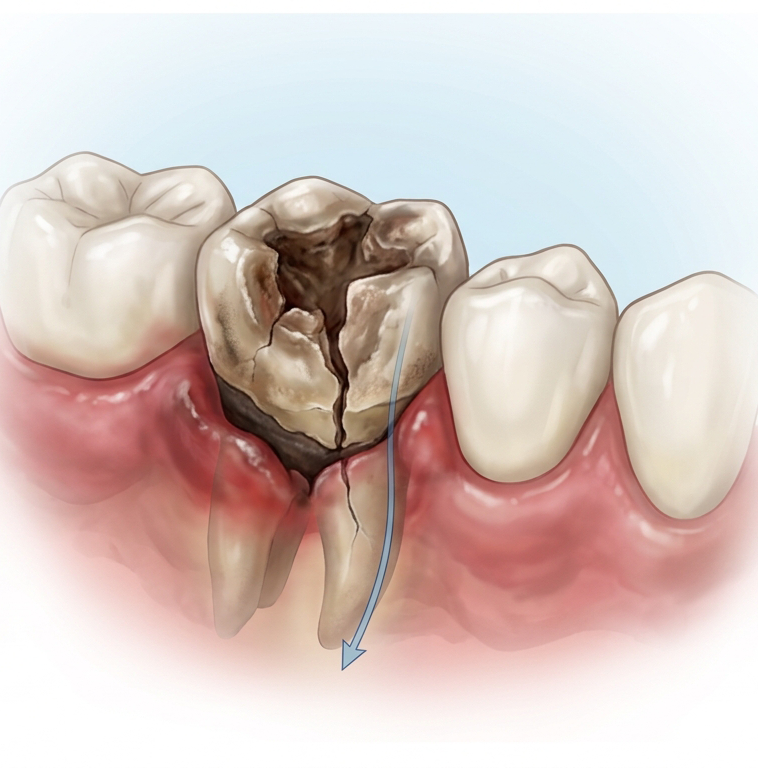
A tooth can become damaged because of deep decay, an accident, repeated dental procedures or a large fracture.
Minor or moderate damage may often be repaired. But if there isn’t enough healthy tooth structure remaining to restore the tooth successfully, extraction may need to be considered.
Your dentist will first assess whether treatments such as a dental filling, dental crown or root canal treatment could save the tooth.
Extraction may be discussed when:
- Decay has destroyed a significant amount of the tooth
- The tooth has fractured extensively
- Damage extends below the gumline
- The tooth cannot be predictably restored
The decision depends on the individual tooth and its long-term outlook.
2. When There Is a Serious Tooth Infection
An infection can develop when bacteria reach the pulp inside a tooth, often because of deep decay, cracks or trauma.
A root canal treatment can frequently be used to remove the infection and preserve the natural tooth. However, there are situations where root canal treatment may not be appropriate or where a tooth cannot be successfully restored afterward.
Signs of a dental infection can include:
- Persistent or severe toothache
- Pain when biting or chewing
- Swelling around the tooth or gums
- A pimple-like swelling on the gum
- Facial swelling
- Sensitivity that doesn’t settle
Dental infections should not be ignored. Your dentist needs to determine the source of the infection and recommend appropriate treatment.
3. When Gum Disease Has Severely Affected the Tooth
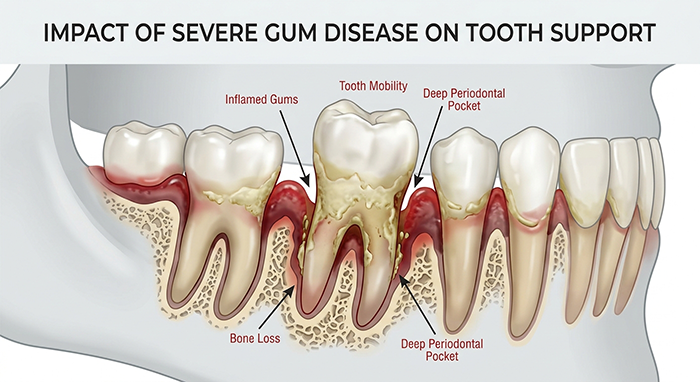
Advanced gum disease doesn’t only affect your gums. It can also damage the tissues and bone that hold your teeth firmly in place.
As supporting bone is lost, teeth may become increasingly loose.
Dentists generally aim to manage gum disease and preserve teeth whenever reasonably possible. However, if a tooth has lost substantial support and has a poor prognosis, removing it may sometimes form part of the overall treatment plan.
Other signs of gum disease may include:
- Bleeding gums
- Swollen or tender gums
- Receding gums
- Persistent bad breath
- Changes in your bite
- Loose or shifting teeth
Early diagnosis and treatment of gum disease can help reduce the risk of reaching this stage.
4. When Wisdom Teeth Cause Problems
Not every wisdom tooth needs to be removed. Some erupt normally, remain healthy and never cause any significant problems.
Others may become impacted, meaning they do not have enough room to erupt properly or remain partly or completely trapped beneath the gum or bone.
A problematic wisdom tooth may contribute to:
- Repeated gum infections around the tooth
- Pain or swelling
- Decay in the wisdom tooth or neighbouring tooth
- Food repeatedly becoming trapped
- Damage to nearby structures
- Cysts in some cases
Your dentist may use dental X-rays to assess the position of your wisdom teeth and determine whether wisdom tooth removal is appropriate.
5. When Extraction Is Needed for Orthodontic Treatment
Sometimes there simply isn’t enough space in the mouth for all the teeth to align properly.
In selected orthodontic cases, removing one or more teeth may be considered to create the space required to move the remaining teeth into their planned positions.
However, tooth extraction isn’t necessary for everyone having braces or clear aligners.
Before recommending an extraction, the orthodontist considers factors such as:
- The amount of crowding
- The position of individual teeth
- Your bite
- Jaw and facial relationships
- Your overall orthodontic treatment goals
If extraction is recommended, your orthodontist should explain why it forms part of your specific treatment plan.
Does Tooth Extraction Hurt?
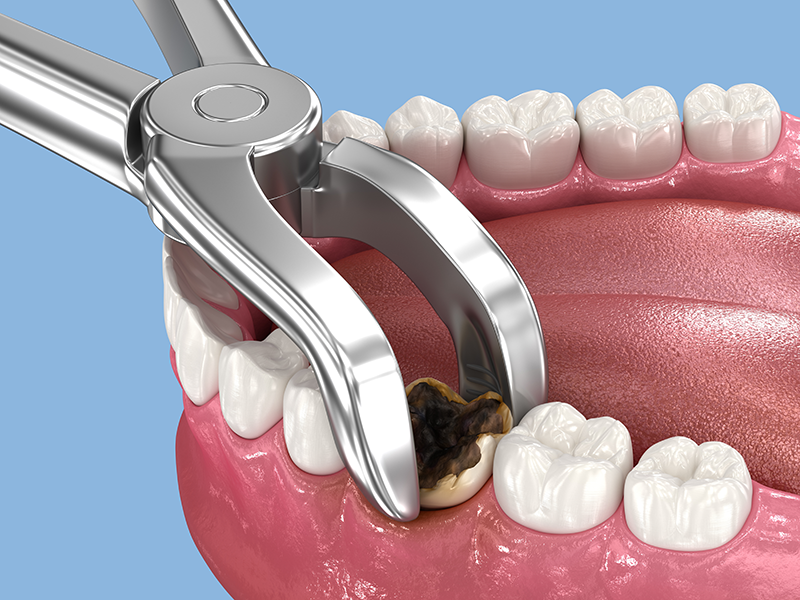
It’s completely normal to feel nervous about having a tooth removed.
Before the extraction, local anaesthesia is typically used to numb the area. You may feel pressure or movement during the procedure, but the aim is to keep you comfortable.
After the extraction, some soreness, swelling or mild bleeding can occur as the area begins to heal. Your dentist will provide instructions on how to care for the extraction site.
Following these instructions carefully can support normal healing.
What Should You Do After a Tooth Extraction?
Your dentist will give you instructions based on your procedure. In general, it is important to protect the blood clot that forms in the extraction socket because it plays an important role in healing.
You may be advised to:
- Bite gently on gauze as instructed
- Avoid vigorous rinsing immediately after the procedure
- Avoid smoking or vaping while the area heals
- Choose soft foods initially
- Avoid disturbing the extraction site with your fingers or tongue
- Maintain oral hygiene while being careful around the extraction area
- Take prescribed or recommended medication exactly as directed
Contact your dental clinic if you experience severe or increasing pain, heavy bleeding, significant swelling or other symptoms that concern you.
What Happens After the Tooth Is Removed?
Not every extracted tooth needs to be replaced. Wisdom teeth, for example, generally don’t require replacement.
When another permanent tooth is removed, your dentist may discuss whether replacing it would benefit your bite, appearance or ability to chew.
Depending on your individual situation, replacement options may include:
- Dental implants
- Dental bridges
- Partial or complete dentures
Your dentist can explain the advantages and limitations of each option and whether replacement is recommended in your case.
Can the Tooth Be Saved Instead?
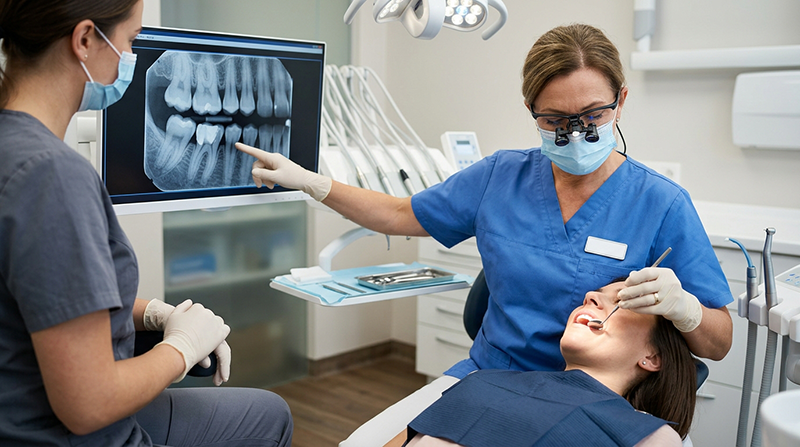
This is an important question to ask before an extraction.
Whenever appropriate, your dentist will usually assess whether the natural tooth can be preserved with treatments such as a filling, crown, root canal treatment or periodontal care.
Sometimes extraction is still the more appropriate option because the tooth is too badly damaged or has a poor long-term prognosis.
A clinical examination and dental X-rays can help your dentist understand the condition of the tooth and discuss the available options with you.
Don’t Ignore a Painful or Damaged Tooth
Having tooth pain doesn’t automatically mean that you need an extraction. Many dental problems can be treated while preserving the natural tooth, particularly when they are identified early.
However, waiting too long can sometimes make the problem more complicated.
If you have a severely damaged, infected or loose tooth, or you’re experiencing problems with your wisdom teeth, contact us at 800777000 to book a consultation with our dentist specialists at Go Dental Clinic. Our team can examine the tooth, explain whether it can be saved and discuss tooth extraction when it is the appropriate treatment option.