


A bright, confident smile can make a significant difference in your appearance and self-confidence. Over time, teeth can become stained or discoloured due to factors such as coffee, tea, smoking, certain foods, aging, and poor oral hygiene. Fortunately, modern teeth whitening treatments offer effective solutions to restore a brighter smile.
When considering teeth whitening, many people wonder whether they should choose professional clinic whitening or try home whitening options. While both methods can improve tooth colour, they differ in terms of effectiveness, safety, treatment time, and results.
What Is Teeth Whitening?
Teeth whitening is a cosmetic dental procedure designed to lighten the colour of natural teeth and remove stains or discoloration. The treatment uses whitening agents, usually containing hydrogen peroxide or carbamide peroxide, to break down stains present on the tooth surface.
Teeth whitening can help improve:
- Yellow or dull-looking teeth
- Stains caused by coffee, tea, and food
- Tobacco-related discoloration
- Age-related tooth darkening
- Uneven tooth shades
However, whitening treatments only work on natural tooth structure. Dental restorations such as dental crowns, veneers, bridges, and fillings do not change colour with whitening products.
What Is Clinic Whitening?
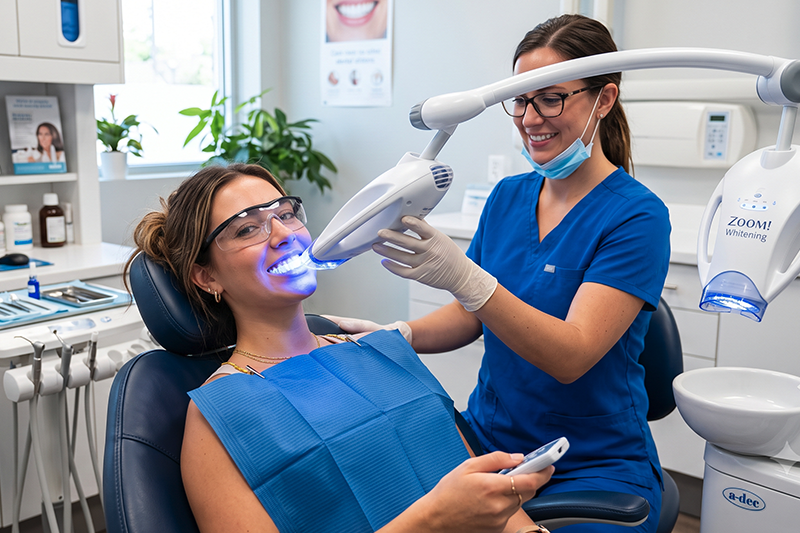
Clinic whitening, also known as professional or in-office whitening, is a treatment performed by a qualified dental professional. It uses higher-concentration whitening agents under controlled conditions to achieve faster and more noticeable results.
During the procedure, the dentist protects your gums and soft tissues before applying the whitening gel to your teeth. Advanced whitening systems may use special lights or activation methods to enhance the process. Professional teeth whitening is designed to provide safe, predictable, and effective smile enhancement under expert supervision.
Benefits of Clinic Whitening
Faster Results
One of the biggest advantages of clinic whitening is speed. Many patients notice a visibly brighter smile after a single appointment. The treatment is ideal for people who want quick results before an important event, celebration, or professional occasion.
Professional Supervision
Since the procedure is performed by a dentist, the whitening process is carefully monitored. The dentist can assess your oral health, identify potential problems, and select the most suitable whitening approach.
Stronger Whitening Effect
Professional whitening treatments use higher concentrations of whitening agents compared to many over-the-counter products. This allows them to remove deeper stains and achieve more dramatic results.
Reduced Risk of Gum Irritation
Dentists use protective measures to shield gums and soft tissues during treatment, reducing the risk of irritation or sensitivity.
Customized Treatment
Every smile is different. A dentist can adjust the whitening approach based on your tooth condition, sensitivity level, and desired outcome.
What Is Home Whitening?
Home whitening involves using whitening products outside the dental clinic. These may include dentist-provided whitening trays, whitening strips, gels, toothpaste, or other over-the-counter products.
Professional take-home whitening usually involves custom-made trays created by a dentist. These trays fit your teeth precisely and allow controlled application of whitening gel over a specific treatment period.
What are the benefits of Home Whitening?
Convenient Treatment
Home whitening allows you to whiten your teeth according to your schedule. Many people prefer this option because it can be done at home without visiting the clinic for every application.
Gradual Whitening Results
Home whitening provides gradual improvement over several days or weeks. This can be suitable for people who prefer a more subtle whitening process.
Custom Whitening Trays Provide Better Results
Dentist-prescribed home whitening trays are designed specifically for your teeth, helping distribute whitening gel evenly and reducing contact with gums.
Suitable for Maintenance
Home whitening can be useful for maintaining results after professional whitening treatment or for occasional touch-ups.
What are the differences between Clinic Whitening and Home Whitening?
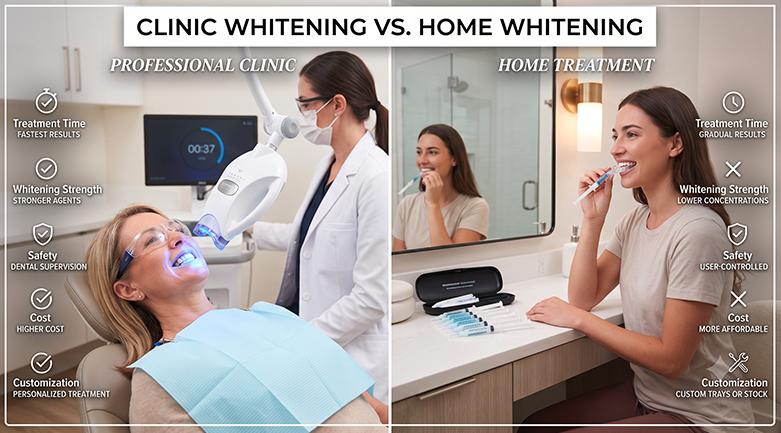
Treatment Time
Clinic whitening provides faster results, often within one dental appointment. Home whitening requires consistent use over a longer period, depending on the product and whitening goals.
Whitening Strength
Professional clinic whitening generally uses stronger whitening agents under controlled conditions, allowing more noticeable results. Home whitening products typically contain lower concentrations for gradual improvement.
Safety
Both methods can be safe when used correctly. However, professional whitening offers the advantage of dental supervision, which helps identify existing dental issues and reduce risks.
Cost
Home whitening options are usually more affordable initially, while clinic whitening may involve a higher cost due to professional care and advanced whitening systems.
Level of Customization
Clinic whitening provides personalized treatment based on your dental condition. Dentist-provided home whitening trays are also customized, while many store-bought products offer a one-size-fits-all approach.
Which Whitening Option Gives Better Results?
The best option depends on your expectations and dental condition.
Clinic whitening may be better if you:
- Want immediate results
- Have significant staining
- Need whitening before a special event
- Prefer professional supervision
- Want a more dramatic improvement
Home whitening may be better if you:
- Prefer gradual whitening
- Want a convenient treatment option
- Have a busy schedule
- Want to maintain whitening results
- Prefer whitening at your own pace
A dentist can help determine which option is most suitable after evaluating your teeth and gums.
Is Professional Teeth Whitening Safe?
Yes, professional teeth whitening is considered safe when performed under dental supervision. Before whitening, dentists evaluate your teeth and gums to ensure you are a suitable candidate. However, some patients may experience temporary sensitivity after whitening. This usually improves within a short period and can often be managed with sensitivity toothpaste or adjusted treatment methods. Patients with untreated cavities, gum disease, cracked teeth, or enamel problems may need dental treatment before whitening.
Can Everyone Get Teeth Whitening?
Teeth whitening is not suitable for everyone. A dental examination is recommended before starting treatment.
Whitening may not be ideal for:
- Children and teenagers with developing teeth
- Pregnant or breastfeeding individuals (consultation recommended)
- Patients with severe tooth sensitivity
- People with untreated cavities or gum disease
- Individuals expecting restorations to whiten
A dentist can recommend alternative cosmetic treatments if whitening is not the right solution.
How Long Do Teeth Whitening Results Last?
The duration of whitening results varies from person to person. Factors that influence how long your smile stays bright include:
- Diet habits
- Coffee and tea consumption
- Smoking
- Oral hygiene routine
- Regular dental cleanings
Maintaining good oral hygiene and limiting staining foods can help extend whitening results. Occasional touch-up treatments may also help maintain brightness.
How to Maintain Your Whitening Results
After teeth whitening, follow these tips to keep your smile brighter:
- Avoid Staining Foods and Drinks
- Limit coffee, tea, red wine, and dark-coloured foods immediately after whitening.
- Maintain Good Oral Hygiene
- Brush twice daily, floss regularly, and attend routine dental checkups.
- Drink Water Frequently
- Water helps rinse away food particles and reduces staining.
- Use Whitening Products as Recommended
- Avoid excessive whitening, as overuse may increase sensitivity.
Some Common Questions Asked About Clinic and Home Whitening
Is clinic whitening better than home whitening?
Clinic whitening provides faster and more noticeable results, while home whitening offers convenience and gradual improvement. The best choice depends on your goals and dental condition.
How many shades can teeth whitening improve?
Results vary depending on the type of stains and whitening method used. Professional whitening generally provides more significant improvement compared to many over-the-counter options.
Does teeth whitening damage enamel?
When performed correctly, teeth whitening does not damage healthy enamel. Following professional guidance helps ensure safe treatment.
Is home whitening safe?
Dentist-supervised home whitening is generally safe. Overusing unregulated whitening products may increase the risk of sensitivity or irritation.
How often can I whiten my teeth?
The frequency depends on your oral health, whitening method, and dentist’s recommendations.
Both clinic whitening and home whitening can help improve the appearance of your smile. Professional whitening offers faster, stronger, and more customized results, while home whitening provides flexibility and convenience. The right choice depends on your dental health, whitening goals, and lifestyle. Consulting a dental professional before starting any whitening treatment ensures that your smile receives the safest and most effective care. Contact us today at 800777000 to book and appointment with our specialist dentists at Go Dental Clinics.