


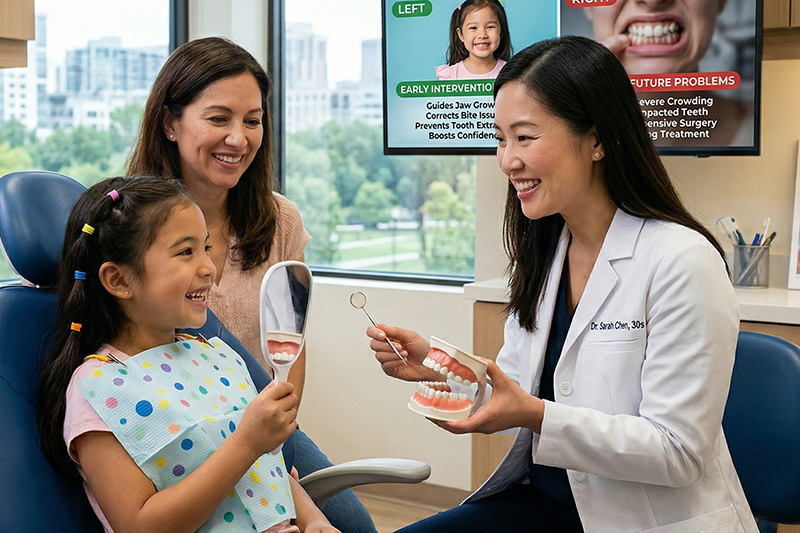
When parents think about braces or aligners, they often assume orthodontic care begins during the teenage years. However, early orthodontic visits can play a crucial role in preventing serious dental problems later in life. In fact, many dental professionals recommend that children have their first orthodontic evaluation by the age of seven.
Early assessment doesn’t always mean immediate braces. Instead, it allows dentists and orthodontists to monitor growth patterns, identify developing issues, and plan appropriate orthodontic treatment at the right time. By addressing concerns early, families can often avoid more complex and costly procedures in the future.
Let’s explore how early orthodontic visits can prevent major dental problems and set the foundation for a healthy, confident smile.
Why Age Seven Is Important
By the age of seven, most children have a mix of baby teeth and permanent teeth. This stage allows orthodontists to evaluate how the adult teeth are emerging and how the jaw is developing. At this age, professionals can detect
- Crowding
- Bite misalignment
- Jaw growth irregularities
- Crossbites or open bites
- Protruding front teeth
Early detection enables timely orthodontic treatment, guiding proper jaw development before problems become severe.
Identifying Jaw Growth Problems Early
One of the most significant benefits of early orthodontic visits is the ability to monitor jaw growth. The upper and lower jaws must develop in harmony for proper bite alignment. If one jaw grows too quickly or too slowly compared to the other, it can lead to misalignment and facial asymmetry, resulting in difficulties with chewing and speaking.
When identified early, orthodontists can use growth-modifying appliances to gently guide jaw development. This type of early orthodontic treatment is often much simpler than correcting jaw problems after growth is complete.
In severe cases, delayed treatment could require surgical correction during adulthood something that early intervention may help avoid.
Preventing Severe Crowding
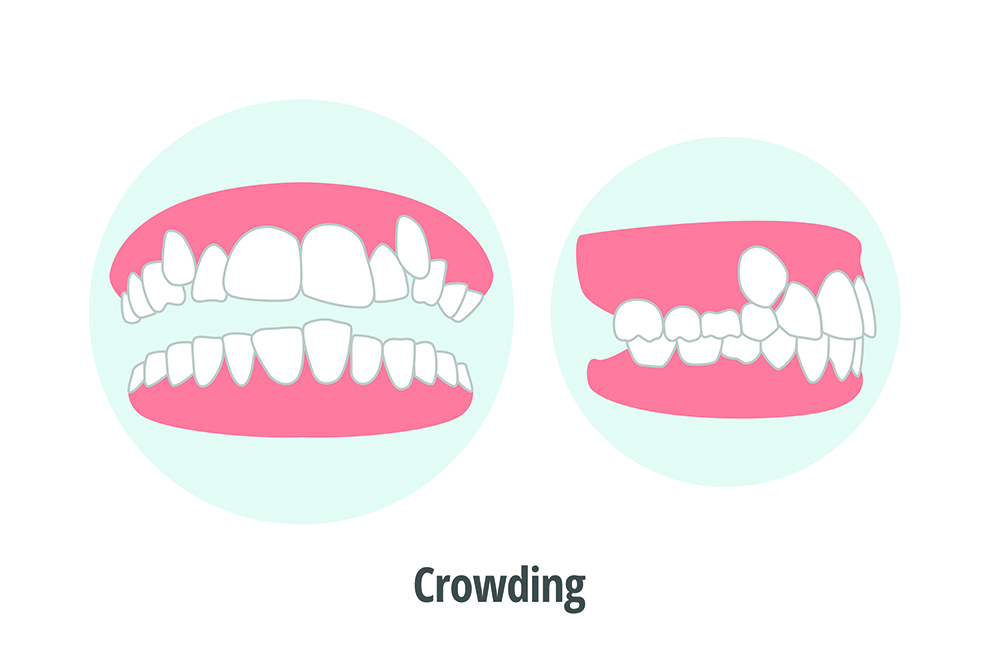
Crowding occurs when there isn’t enough space in the mouth for permanent teeth to erupt properly. Without early evaluation, teeth may overlap, twist, or become impacted.
Early orthodontic visits allow professionals to
- Monitor space availability
- Recommend space maintainers if baby teeth are lost too soon
- Plan phased orthodontic treatment
- Guide erupting teeth into better positions
By managing space early, orthodontists can reduce the likelihood of severe crowding that might require tooth extractions later.
Reducing Risk of Dental Trauma
Children with protruding front teeth are more likely to experience dental injuries during sports or accidental falls. Early orthodontic correction can reposition these teeth, reducing their vulnerability.
By addressing alignment issues early, orthodontists help protect a child’s smile from avoidable trauma and potential emergency dental procedures.
Improving Speech Development
Teeth and jaw alignment play a key role in speech development. Misaligned teeth or jaw discrepancies can cause speech difficulties, such as lisping or improper pronunciation.
Early orthodontic visits allow professionals to identify structural issues contributing to speech concerns. Timely orthodontic treatment can support clearer speech patterns and boost a child’s confidence in communication.
Encouraging Better Oral Hygiene
Crowded or overlapping teeth are more difficult to clean properly. Food particles and plaque can easily accumulate in tight spaces, increasing the risk of cavities, gum diseases and bad breath. By aligning teeth early, orthodontic treatment makes brushing and flossing easier and more effective. This reduces the likelihood of long-term oral health problems.
Boosting Confidence at a Young Age
A child’s smile plays an important role in self-esteem. Dental issues such as severely crooked teeth or noticeable bite problems can sometimes lead to teasing or self-consciousness.
Early orthodontic visits allow parents to understand their child’s needs and create a proactive plan. While not every child requires immediate treatment, knowing that a plan is in place can provide reassurance. When early orthodontic treatment improves alignment, it often enhances both appearance and confidence during formative years.
Addressing Harmful Oral Habits
Certain habits can negatively affect dental development, including thumb sucking, prolonged pacifier use, tongue thrusting and mouth breathing. Early orthodontic visits allow professionals to detect and manage these habits before they cause major alignment issues.
Intervening early can prevent structural changes that might otherwise require extensive orthodontic treatment in the future.
Signs Your Child May Need an Early Orthodontic Evaluation
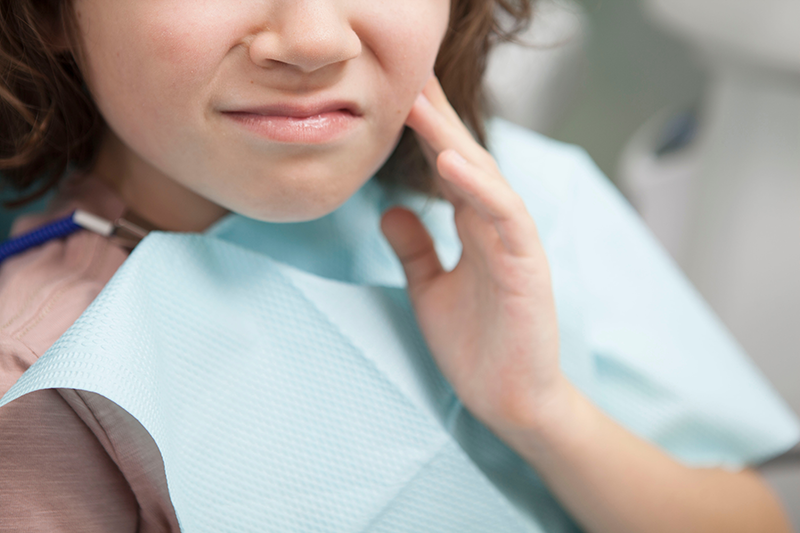
While every child should have an orthodontic screening by age seven, certain signs may indicate the need for earlier assessment
- Early or late loss of baby teeth
- Difficulty chewing or biting
- Mouth breathing
- Thumb sucking beyond age five
- Misaligned or crowded teeth
- Jaws that shift or make sounds
If you notice any of these symptoms, scheduling an orthodontic consultation can provide clarity and peace of mind.
Long-Term Benefits of Early Orthodontic Care
Early orthodontic visits lay the foundation for a lifetime of healthy smiles. By addressing potential problems early, orthodontists can
- Guide proper jaw development
- Improve facial balance
- Prevent severe misalignment
- Enhance oral health
- Reduce risk of injury
- Improve overall function
Investing in early orthodontic care is one of the most proactive steps parents can take for their child’s dental health. By scheduling an evaluation around age seven, you give your child the best chance for a well-aligned, healthy, and confident smile while often avoiding more complex treatments later. Early intervention addresses growth, alignment, and habit-related issues before they become serious, ensuring both function and aesthetics are optimized. Contact us today at 800777000 to book a FREE consultation with our specialist orthodontists and take the first step toward a lifetime of healthy smiles.