


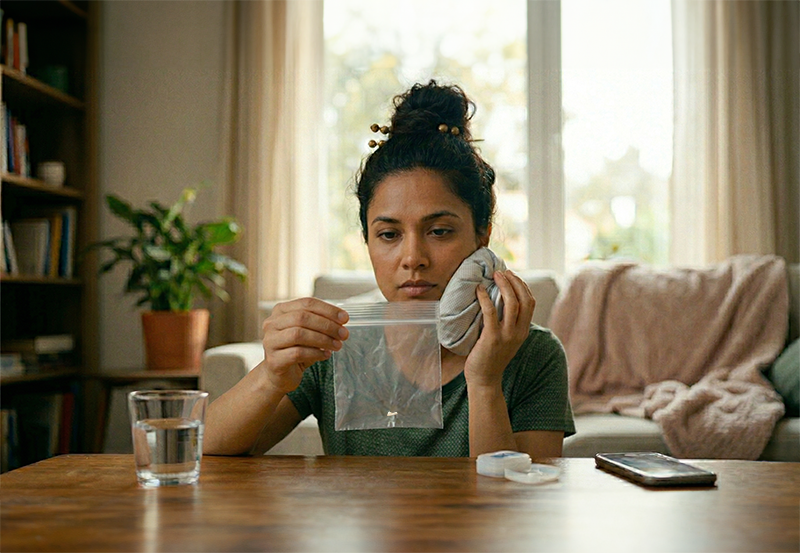
A cracked or chipped tooth can happen unexpectedly whether you’re biting into something hard, playing sports, or experiencing a minor fall. While some cracks may seem small and painless, others can cause significant discomfort and anxiety. No matter the severity, a damaged tooth should never be ignored. Prompt care and a timely dental checkup are essential to prevent further complications.
Until you can see your dentist, knowing how to manage the situation properly can help reduce pain, protect the tooth, and improve the chances of successful treatment, such as tooth fillings or composite restorations.
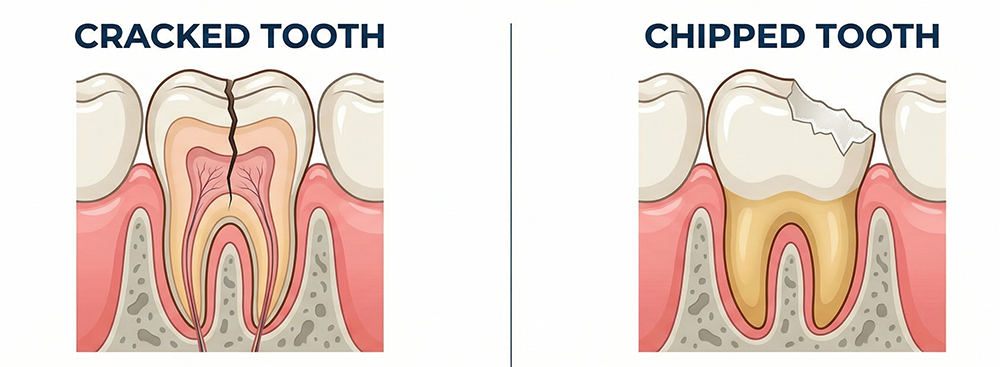
Cracked vs. Chipped Tooth
Understanding the type of damage helps in choosing the right treatment.
Chipped Tooth
A chipped tooth typically involves a small piece of enamel breaking off. It may not always cause pain, especially if the inner layers are unaffected.
Cracked Tooth
A crack may extend deeper into the tooth structure, potentially reaching the dentin or pulp. Cracks can cause sensitivity to hot, cold, or pressure and may worsen over time if untreated.
Regardless of the type, both situations require a professional dental checkup to assess the extent of damage and determine whether tooth fillings, composite restorations, or other treatments are needed.
Immediate Steps to Take After the Injury
1. Rinse Your Mouth
Gently rinse your mouth with warm water to clean the area. This helps remove debris and reduce the risk of infection.
If there is bleeding, apply gentle pressure with clean gauze until it stops.
2. Save Any Broken Pieces
If a piece of the tooth has broken off, try to locate and store it in a clean container. While it’s not always possible to reattach the fragment, bringing it to your dental checkup allows your dentist to evaluate potential restoration options.
3. Apply a Cold Compress
If there is swelling or pain, apply a cold compress to the outside of your cheek near the affected area. This helps reduce inflammation and numb discomfort.
Use the compress for 15–20 minutes at a time.
4. Manage Pain Safely
Over-the-counter pain relievers such as ibuprofen can help alleviate discomfort. Avoid placing aspirin directly on the gums, as this can irritate soft tissues.
If the tooth is sensitive, avoid hot, cold, or sugary foods until you see your dentist.
5. Protect the Tooth
If the tooth has a sharp or jagged edge, it can irritate your tongue or cheeks. You can temporarily cover the rough surface with
- Dental wax (available at pharmacies)
- Sugar-free chewing gum
- Temporary dental cement
These are short-term solutions meant to protect the area until your dental checkup.
What to Avoid
Taking the wrong steps can worsen the damage.
- Do not chew on the affected side.
- Avoid hard, crunchy, or sticky foods.
- Do not attempt to file or reshape the tooth yourself.
- Avoid extreme temperature foods and beverages.
Protecting the tooth from additional stress reduces the risk of deeper fractures that might require more extensive treatment than simple tooth fillings.
Why Prompt Dental Care Is Crucial
Even if the damage appears minor, internal tooth structures may be affected. A crack can allow bacteria to enter the tooth, increasing the risk of infection or abscess formation.
During your dental checkup, your dentist will
- Examine the tooth visually
- Take X-rays if needed
- Check for pulp involvement
- Evaluate bite alignment
- Recommend appropriate treatment
Early intervention often allows for conservative solutions like composite restorations, preventing the need for crowns or root canal therapy.
Treatment Options for Cracked or Chipped Teeth
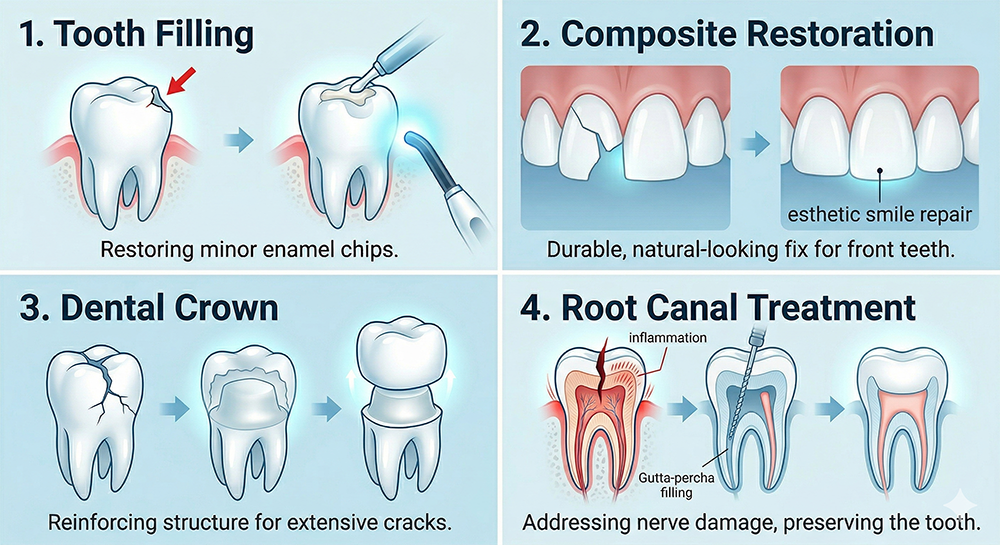
The appropriate treatment depends on the severity and depth of the damage.
1. Tooth Fillings
If the crack or chip is minor and only affects the enamel or outer dentin layer, tooth fillings may be sufficient. Fillings restore the tooth’s structure and protect it from further damage. Tooth fillings are quick, minimally invasive, and effective for small fractures.
2. Composite Restorations
Composite restorations are one of the most common treatments for chipped teeth. Made of tooth-coloured resin, they blend naturally with your smile.
Benefits of composite restorations include
- Natural appearance
- Minimal removal of healthy tooth structure
- Quick application
- Durable and long-lasting results
Composite restorations are especially popular for front teeth where aesthetics matter most.
3. Dental Crowns
If the crack is extensive and compromises the tooth’s strength, a dental crown may be recommended. A crown covers the entire tooth, restoring function and preventing further fracture.
4. Root Canal Treatment
If the crack reaches the pulp and causes infection or severe pain, root canal therapy may be necessary. This procedure removes infected tissue while preserving the outer structure of the tooth.
Signs You Need Emergency Dental Care
While waiting for your dental checkup, Monitoring for warning signs that require immediate attention is needed while waiting for your dental checkup.
- Severe or worsening pain
- Swelling in the face or gums
- Fever
- Difficulty chewing
- Sensitivity that doesn’t subside
These symptoms may indicate infection or nerve involvement and require urgent treatment.
How to Prevent Further Damage
Until you reach your dentist, follow these preventive measures:
- Stick to soft foods like yogurt, mashed potatoes, and soup.
- Maintain gentle oral hygiene by brushing carefully around the affected tooth.
- Continue flossing, but avoid snapping floss against the damaged area.
- Use a soft-bristled toothbrush.
- Maintaining cleanliness reduces the risk of bacteria entering exposed areas.
- Long-Term Prevention Tips
Most minor cases can be treated effectively with tooth fillings or composite restorations, restoring your tooth’s strength and natural appearance. Ignoring the issue, however, can lead to more serious complications requiring extensive procedures. If you are someone facing issues like chipped or cracked tooth, contact us today at 800777000 to book an appointment with our specialist dentists at Go Dental Clinics