

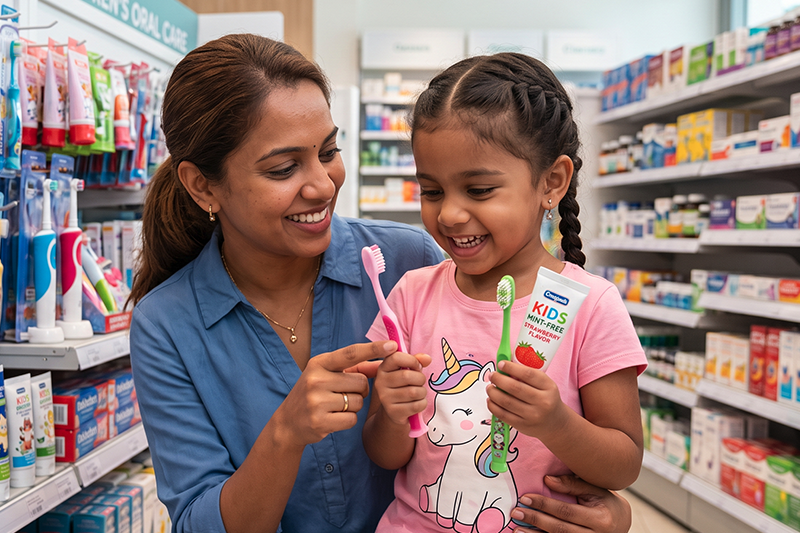
For many parents, choosing dental products for children feels surprisingly confusing. Everything looks kid-friendly, every brand claims to be gentle or dentist recommended and yet they’re left unsure whether they’re making the right choice. The truth is, children’s oral care doesn’t need to be complicated. But it does need to be intentional.
Let’s see how you can confidently choose the right toothbrush and toothpaste for your child without second-guessing every purchase.
Why the Right Toothbrush and Toothpaste Actually Matter
Before jumping into products, it helps to understand why this even matters.
Children’s teeth are not just smaller versions of adult teeth. They have thinner enamel are more vulnerable to decay. At the same time, kids are still learning how to brush properly which means technique is often imperfect.
This combination makes them more prone to:
- Cavities
- Gum irritation
- Early enamel wear
- Plaque buildup
So the tools you give them, the toothbrush and toothpaste play a huge role in protecting their oral health during these early years.
Think of it this way: good brushing habits start with the right equipment, just like learning to write starts with the right pencil.
Choosing the Right Toothbrush for Children
Let’s start with the toothbrush, because this is where most parents get overwhelmed. Walk into any store and you’ll find flashing colours, cartoon characters, vibrating brushes, soft bristles, silicone heads, the list goes on.
So what actually matters?
1. Size Matters More Than You Think
One of the most common mistakes parents make is choosing a toothbrush that’s too big. A child’s mouth is small, and a large brush head can make brushing uncomfortable or even painful. It also makes it harder to reach back teeth, where cavities often start.
So what to look for?
- Small brush head (kid-sized, not mini adult size)
- Slim handle for better grip
- Easy maneuverability inside the mouth
If your child is struggling to brush properly, sometimes it’s not their effort—it’s the brush size.
2. Soft Bristles Are Non-Negotiable
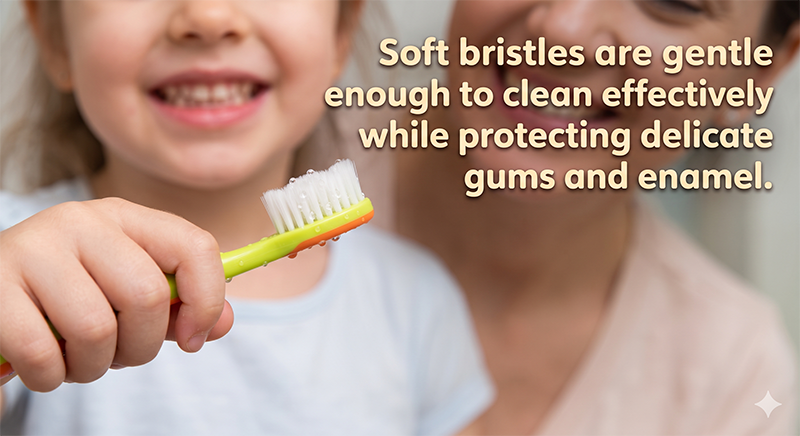
Hard bristles do not clean better. In fact, they can do more harm than good for children.
Kids often brush with too much pressure or lack proper technique. Hard bristles can:
- Damage gum tissue
- Wear down enamel
- Cause sensitivity over time
Soft bristles are gentle enough to clean effectively while protecting delicate gums and enamel.
If there’s one rule you remember from this blog, let it be this: soft is always safer for kids.
3. Age-Appropriate Design
Toothbrushes are usually labelled by age ranges like 0–2, 3–5, 6–9, etc. These are not just marketing labels, they actually matter.
- 0–2 years: Silicone finger brushes or ultra-soft infant brushes
- 3–5 years: Small heads, thick grip for parents to assist
- 6–9 years: Slightly larger heads, designed for developing independence
- 10+ years: Transition to adult-style brushes with soft bristles
Choosing based on age ensures better comfort and proper brushing technique.
4. Manual vs Electric Toothbrush for Kids
This is a big question parents ask.
Should you go electric or stick with a manual toothbrush?
Manual toothbrush:
- Great for learning technique
- More control for parents during brushing
- Affordable and widely available
Electric toothbrush:
- Can improve cleaning effectiveness
- Helpful for kids who rush brushing
- Makes brushing more fun (which increases consistency)
If your child struggles with brushing or gets bored easily, an electric toothbrush with a timer can be a game changer. But if they are just starting out, a manual brush is perfectly fine.
5. Make Brushing Fun
Children are more likely to brush regularly if they actually enjoy their toothbrush.
Let them choose:
- Their favourite colour
- Cartoon characters
- Fun shapes or handles
It may seem small, but engagement builds habits and habits build lifelong oral health.
Choosing the Right Toothpaste for Children
Now let’s talk toothpaste. This is where many parents feel uncertain, especially when it comes to fluoride.
1. Should the toothpaste have fluoride?
Fluoride is one of the most important ingredients in toothpaste for preventing cavities. It helps strengthen enamel and protect against decay. However, children often swallow toothpaste, especially under age 6. So the approach is about the right amount, not avoiding fluoride entirely.
- Under 3 years: a smear (rice-grain size) of fluoride toothpaste
- 3–6 years: pea-sized amount
- 6+ years: standard fluoride toothpaste use under supervision
Fluoride is safe when used in correct amounts and supervised.
2. Child-Friendly Flavour Matters More Than You Think
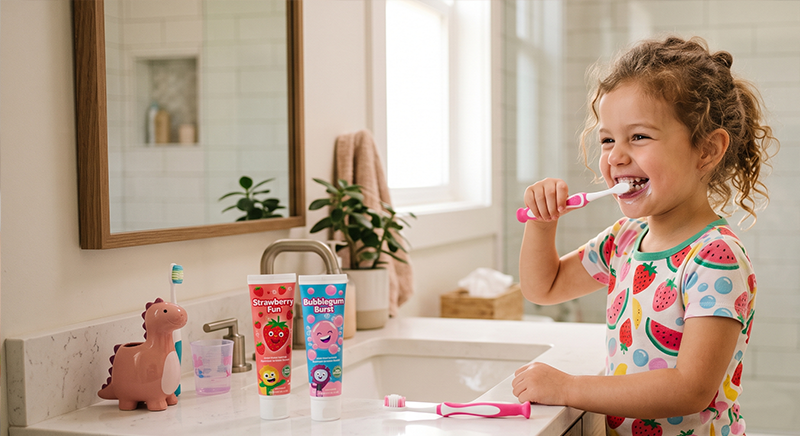
Ever tried brushing a child’s teeth with mint toothpaste when they hate mint? It doesn’t end well.
Children respond better to:
- Strawberry
- Bubblegum
- Mild fruity flavours
Flavour may seem trivial, but it can make or break brushing compliance. If they enjoy the taste, they are more likely to brush properly and regularly.
3. Avoiding Too Strong Formulas
Adult toothpaste often contains stronger whitening agents, abrasives, or intense mint levels. These are not suitable for children.
For kids, toothpaste should be:
- Low-abrasion
- Gentle on enamel
- Free from harsh whitening agents
Children don’t need teeth whitening toothpaste, their focus should be protection, not aesthetics.
4. Look for ADA or Dentist Recommendations
When in doubt, look for dentist-approved or clinically tested labels. These products are generally safer and more reliable.
But remember, branding alone isn’t everything. What matters more is suitability for your child’s age and needs.
5. Foaming vs Non-Foaming Toothpaste
Some kids find foaming toothpaste overwhelming and try to spit it out immediately or stop brushing early.
If your child struggles with this, consider:
- Low-foam toothpaste
- Gel-based formulas
- Mild texture options
Comfort leads to longer brushing time and better cleaning.
How Parents Can Make Brushing Easier

Choosing the right products is only half the story. The other half is actually getting kids to brush properly.
Here are some real-world tips that work:
1. Brush Together
Children imitate what they see. Brushing together turns it into a shared routine rather than a chore.
2. Using a Timer or Song
Two minutes can feel like forever to a child. A fun song or timer makes it manageable.
3. Turn Brushing Into a Game
“Let’s chase away the sugar bugs!” works better than “Go brush your teeth.”
4. Don’t Rush Independence
Even if your child wants to brush alone, they often need supervision until around age 7–8. You can let them start, but finish the job for proper cleaning.
5. Replace Toothbrushes Regularly
Every 3 months or sooner if bristles gets frayed. A worn toothbrush doesn’t clean properly.
Common Mistakes Parents Make
Even well-intentioned parents sometimes make small mistakes that affect oral health:
- Choosing hard bristles thinking they clean better
- Using too much toothpaste
- Switching toothpaste too often
- Letting children brush unsupervised too early
- Ignoring early signs of cavities or sensitivity
Awareness of these small details can make a big difference over time.
Building Lifelong Oral Health Starts Early
By choosing the right oral care products and encouraging healthy brushing habits from an early age, you are giving your child a strong foundation for lifelong dental health. Regular dental check-ups, combined with proper brushing and fluoride protection, can help prevent cavities and keep young smiles healthy as they grow.
If you are unsure which toothbrush or toothpaste is best suited for your child, consult our specialist pediatric dentist for personalized guidance. At Go Dental Clinic, our pediatric dentistry team is committed to helping children develop healthy oral habits and confident smiles. Call 800 777 000 to schedule an appointment today.