



A child’s smile is an important part of their overall health and development. While regular brushing, flossing, and dental checkups play a major role in maintaining good oral health, many parents do not realize that diet also has a powerful impact on children’s teeth.
The foods and drinks children consume every day can either strengthen their teeth or increase the risk of cavities and other dental problems. A balanced diet provides essential nutrients that help build strong teeth, support healthy gums, and promote proper oral development.
From the first baby tooth to permanent teeth, good nutrition plays a key role in creating a foundation for lifelong dental health. Let’s go through in detail.
Why Is Diet Important for Children’s Dental Health?
Children’s teeth are constantly developing, and they need essential nutrients to grow strong and healthy. A poor diet that is high in sugar and low in important vitamins and minerals can increase the risk of tooth decay, enamel weakness, and gum problems.
The foods children eat affect their teeth in several ways:
- Provide minerals needed for strong enamel
- Support healthy gum tissue
- Influence the amount of harmful bacteria in the mouth
- Affect saliva production, which protects teeth
- Reduce or increase the risk of cavities
A healthy diet combined with proper oral hygiene creates the best environment for maintaining strong teeth.
How Does Sugar Affect Children’s Teeth?
Sugar is one of the biggest contributors to tooth decay in children. When children eat sugary foods or drinks, bacteria in the mouth use the sugar to produce acids. These acids attack the protective outer layer of teeth, known as enamel. Over time, repeated acid attacks can lead to:
- Weakening of tooth enamel
- White spots on teeth
- Cavities
- Tooth sensitivity
- Pain or infection
Common sugary foods and drinks that can increase cavity risk include:
Candy, Chocolate, Cookies, Cakes, Sweetened cereals, Soft drinks, Packaged juices, Flavoured milk. It is not only the amount of sugar that matters, but also how frequently children consume it. Frequent snacking on sugary foods gives bacteria more opportunities to produce harmful acids.
Best Foods for Strong and Healthy Teeth in Kids
A tooth-friendly diet should include foods rich in calcium, phosphorus, vitamins, and fiber. These nutrients help strengthen enamel and support healthy oral development.
1. Dairy Products for Strong Teeth
Dairy products are excellent sources of calcium and phosphorus, minerals that help strengthen tooth enamel.
Good choices include:
- Milk
- Cheese
- Plain yogurt
Cheese can be especially beneficial because it stimulates saliva production, which helps neutralize acids and protect teeth.
2. Fruits and Vegetables

Fruits and vegetables provide vitamins, minerals, and fiber that support healthy teeth and gums. Crunchy fruits and vegetables such as:
- Apples
- Carrots
- Cucumbers
- Celery, can help stimulate saliva flow and naturally clean the mouth.
Vitamin-rich fruits, especially those containing vitamin C, support healthy gums and help maintain strong oral tissues.
3. Protein-Rich Foods
Protein provides nutrients needed for healthy tooth development. Good protein sources include:
- Eggs
- Fish
- Chicken
- Beans
- Lentils
- Nuts
These foods contain important minerals that contribute to strong teeth.
4. Whole Grains
Whole grains provide essential nutrients and are better choices compared to highly refined carbohydrate-rich foods.
Examples include:
- Whole wheat bread
- Brown rice
- Oats
- Whole grain cereals
They provide steady energy while supporting overall health.
5. Water reduces acid levels
Water is one of the best drinks for children’s teeth. Water helps by:
- Washing away food particles
- Helping neutralize acids and rinse away food particles
- Supporting saliva production
- Preventing dry mouth
Choosing water instead of sugary drinks is one of the simplest ways to reduce cavity risk.
Foods and Drinks That Can Harm Children’s Teeth
While occasional treats are fine, frequent consumption of certain foods can increase the risk of dental problems.
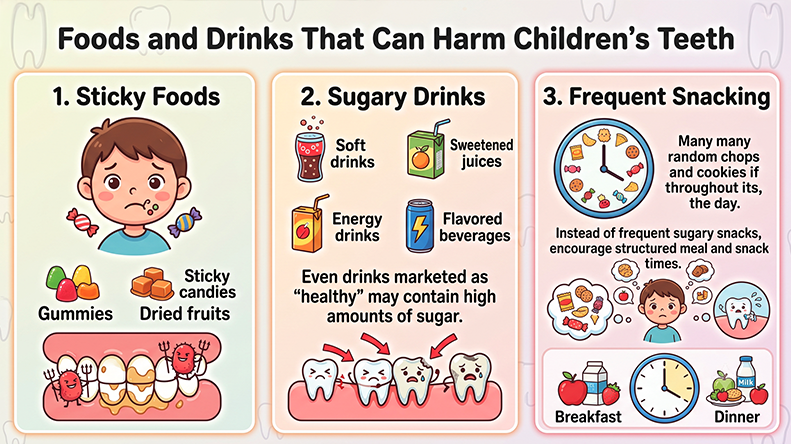
1. Sticky Foods
Sticky foods remain on teeth for longer periods, giving bacteria more time to produce acids. Examples include:
- Gummies
- Caramel
- Sticky candies
- Dried fruits
2. Sugary Drinks
Sugary drinks expose teeth to frequent acid attacks. Examples include:
- Soft drinks
- Sweetened juices
- Energy drinks
- Flavored beverages
Even drinks marketed as “healthy” may contain high amounts of sugar.
3. Frequent Snacking
Constant snacking prevents saliva from naturally repairing and protecting teeth.
Instead of frequent sugary snacks, encourage structured meal and snack times.
Importance of Calcium and Vitamin D for Kids’ Teeth
Calcium and vitamin D are essential nutrients for healthy tooth development. Calcium helps:
- Build strong tooth enamel
- Strengthen jaw bones
- Support proper tooth formation
Sources include Milk, Cheese, Yogurt, Leafy green vegetables, Fortified foods, Vitamin D
Vitamin D helps the body absorb calcium effectively. Sources include:
- Sunlight exposure
- Eggs
- Fish
- Fortified foods
A deficiency in these nutrients may affect tooth development and increase susceptibility to dental problems.
How Diet Affects Baby Teeth
Some parents believe baby teeth are not important because they eventually fall out. However, baby teeth play several important roles.
Healthy baby teeth help:
- Children chew properly
- Support speech development
- Maintain space for permanent teeth
- Guide proper jaw development
Poor nutrition and tooth decay in baby teeth can affect a child’s comfort, eating habits, and future oral health.
Healthy Eating Habits Parents Can Encourage
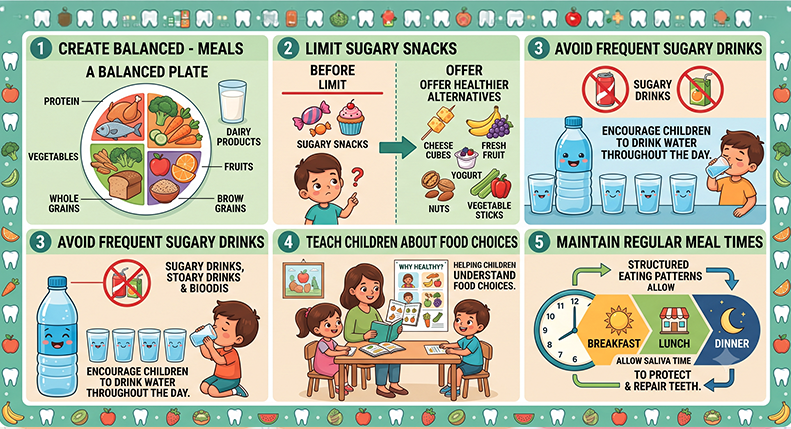
Developing good eating habits early can protect children’s teeth for life.
1. Create Balanced – Meals
Include a combination of
- Protein
- Vegetables
- Fruits
- Whole grains
- Dairy products
A balanced plate provides nutrients needed for healthy teeth and overall growth.
2. Limit Sugary Snacks
Instead of sugary snacks, offer healthier alternatives such as
- Cheese cubes
- Fresh fruit
- Yogurt
- Nuts (age appropriate)
- Vegetable sticks
3. Avoid Frequent Sugary Drinks
Encourage children to drink water throughout the day.
4. Teach Children About Food Choices
Helping children understand why certain foods are healthy can encourage better habits as they grow.
5. Maintain Regular Meal Times
Structured eating patterns allow saliva time to protect and repair teeth between meals.
Diet and Dental Cavities
Dental cavities are one of the most common childhood health problems. They occur when bacteria, food particles, and acids damage tooth enamel. A cavity risk increases when children:
- Eat sugary foods frequently
- Drink sweet beverages often
- Do not brush properly
- Avoid dental checkups
However, cavities are preventable with a combination of:
- Healthy eating habits
- Regular brushing
- Fluoride toothpaste
- Routine dental visits
How Pediatric Dentists Help Maintain Children’s Oral Health
Regular visits to a pediatric dentist help monitor your child’s dental growth and development. A pediatric dentist can:
- Check for early signs of cavities
- Provide preventive care
- Apply fluoride treatments when needed
- Guide parents about nutrition
- Monitor jaw and tooth development
Dental visits allow problems to be identified early before they become more serious.
Some Commonly Asked Questions About Diet and Children’s Teeth
1. What foods are best for children’s teeth?
Foods rich in calcium, phosphorus, protein, and vitamins are best for children’s teeth. Dairy products, vegetables, fruits, whole grains, and protein-rich foods support healthy development.
2. Are sweets completely bad for children?
No. Occasional treats can be included, but frequent sugar consumption increases cavity risk. It is better to limit sugary foods and offer them during meal times rather than as frequent snacks.
3. Is juice healthy for kids’ teeth?
Even 100% fruit juice contains natural sugars that can contribute to tooth decay when consumed frequently. Whole fruits are generally a better choice because they contain fibre and require chewing.
4. How does water help protect teeth?
Water helps rinse food particles, reduce acids, and maintain saliva production, which naturally protects teeth.
5. Can diet affect permanent teeth?
Yes. Nutrition during childhood plays an important role in the development and strength of permanent teeth.
Building Healthy Smiles Through Good Nutrition
A healthy smile starts with healthy habits. While brushing and dental visits are essential, the role of diet in maintaining children’s teeth should never be overlooked. Choosing nutritious foods, limiting sugar, encouraging water, and creating positive eating habits can help protect children from cavities and support strong teeth as they grow.
By combining a balanced diet with proper oral care and regular dental checkups, parents can give their children the foundation for a lifetime of healthy smiles. Contact us today at 800777000 to book an appointment with our Specialist Pediatric dentists at Go Dental Clinics.